Airbag: invento de GeneralMotors
Various manufacturers have over time used different terms for airbags. General Motors' first bags, in the 1970s, were marketed as the Air Cushion Restraint System (ACRS). Common terms in North America include Supplemental Restraint System (SRS) and Supplemental Inflatable Restraint (SIR); these terms reflect the airbag system's nominal role as a supplement to active restraints, i.e., seat belts. Because no action by the vehicle occupant is required to activate or use the airbag, it is considered a passive device.
An American inventor, John W. Hetrick, an industrial engineer and member of the U.S. Navy, designed(1952) and patented(1953) the original safety cushion commonly referred to as an airbag. It was designed based on his experiences with compressed air from torpedos during his service in the U.S. Navy, as well as a need to provide protection for his family in their automobile during accidents. Mr. Hetrick worked with the major American automobile corporations at the time, but they were not interested in investing in safety devices until decades later when they became mandatory. Dr. David S. Breed invented and developed a alternative component for crash detection. Breed Corporation then marketed this innovation first in 1967 to Chrysler. A similar "Auto-Ceptor" crash-restraint, developed by Eaton, Yale & Towne Inc. for Ford was soon offered as an automatic safety system in the USA, while the Italian Eaton-Livia company offered a variant with localized air cushions.
Airbags for passenger cars were introduced in the United States in the mid-1970s, when seat belt usage rates in the country were quite low. Ford built an experimental fleet of cars with airbags in 1971, followed by General Motors in 1973 on Chevrolet vehicles. The early fleet of experimental GM vehicles equipped with airbags experienced seven fatalities, one of which was later suspected to have been caused by the airbag.[9]
In 1974, GM made the ACRS or "Air Cushion Restraint System" available as a regular production option (RPO code AR3) in some full-size Buick, Cadillac and Oldsmobile models. The GM cars from the 1970s equipped with ACRS have a driver side airbag, a driver side knee restraint (which consists of a padded lower dashboard) and a passenger side airbag. The passenger side airbag, protects both front passengers and unlike most newer ones, it integrates a knee cushion, a torso cushion and it also has dual stage deployment which varies depending on the force of the impact. The cars equipped with ACRS have lap belts for all seating positions but they do not have shoulder belts. These were already mandatory equipment in the United States on closed cars without airbags for the driver and outer front passenger seating positions.
The automotive industry's first passenger side knee airbag (not separate) was already used on the 1970s General Motors cars, it was integrated in the passenger airbag that had a knee cushion and a torso cushion.
The development of airbags coincided with an international interest in automobile safety legislation. Some safety experts advocated a performance-based occupant protection standard rather than a standard mandating a particular technical solution, which could rapidly become outdated and might not be a cost-effective approach. As countries successively mandated seat belt restraints, there was less emphasis placed on other designs for several decades.
Manufacturers emphasize that an airbag is not, and can not be an alternative to seatbelts. They emphasize that they are only supplemental to a seatbelt. Hence the commonly used term "Supplemental Restraint System" or SRS. It is vitally important that drivers and passengers are aware of this. In the majority of cases of death caused by air bags, seat belts were not worn.
ASR: GeneralMotors
A traction control system (TCS), also known as Anti-Slip Regulation (ASR), is typically (but not necessarily) an electro-hydraulic system on production vehicles designed to prevent loss of traction of the driven road wheels, and therefore maintain the control of the vehicle when excessive throttle is applied by the driver and the condition of the road surface (due to varying factors) is unable to cope with the torque applied.
The predecessor of modern electronic traction control systems can be found in high-torque, high-power rear-wheel drive cars as a limited slip differential.[citation needed] Limited slip differential is a purely mechanical system that transfers a relatively small amount of power to the non-slipping wheel, it still allows some wheel spin to occur.
In 1971 the Buick division of GM introduced MaxTrac, which used an early computer system to detect rear wheel spin and modulate engine power to those wheels to provide the most traction. A Buick-exclusive at the time, it was an option on all full-size models, including the Riviera, Estate Wagon, Electra 225, Centurion, and popular LeSabre family sedan. Cadillac also introduced the ill fated Traction Monitoring System (TMS) in 1979 on the redesigned Eldorado. It was criticized for its slow reaction time and extremely high failure rate.
ABS: Industria aeronáutica, y apartir de 1970, varias marcas comenzaron a desarrollar sus "versiones" para automovil.
Anti-lock braking systems were first developed for aircraft use in 1929, by the French automobile and aircraft pioneer, Gabriel Voisin, as threshold braking on airplanes is nearly impossible. An early system was Dunlop's Maxaret system, introduced in the 1950s and still in use on some aircraft models.[2] These systems used a flywheel and valve attached to the hydraulic line that fed the brake cylinders. The flywheel was attached to a drum that ran at the same speed as the wheel. In normal braking the drum and flywheel would spin at the same speed. If the wheel slowed suddenly the drum would do the same, leaving the flywheel spinning at a faster rate. This caused the valve to open, allowing a small amount of brake fluid to bypass the master cylinder into a local reservoir, lowering the pressure on the cylinder and releasing the brakes. The use of the drum and flywheel meant the valve only opened when the wheel was turning. In testing, a 30% improvement in braking performance was noted, because the pilots immediately applied full brakes instead of slowly increasing pressure in order to find the skid point. An additional benefit was the elimination of burned or burst tires.
In 1958 a Royal Enfield Super Meteor motorcycle was used by the Road Research Laboratory to test the Maxaret anti-lock brake. The experiments demonstrated that anti-lock brakes could be of great value on motorcycles, where skidding is involved in a high proportion of accidents. Stopping distances were reduced in almost all the tests compared with locked wheel braking, but particularly on slippery surfaces, where the improvement could be as much as 30 percent. Enfield's technical director at the time, Tony Wilson-Jones, saw little future in the system, however, and it was not put into production by the company.
A fully mechanical system saw limited automobile use in the 1960s in the Ferguson P99 racing car, the Jensen FF and the experimental all wheel drive Ford Zodiac, but saw no further use; the system proved expensive and, in automobile use, somewhat unreliable.
Chrysler, together with the Bendix Corporation, introduced a true computerized three-channel, four sensor all-wheel antilock brake system called "Sure Brake" on the 1971 Imperial. It was available for several years thereafter, functioned as intended, and proved reliable. General Motors introduced the "Trackmaster" rear-wheel (only) ABS as an option on their Rear-wheel drive Cadillac models in 1971. In 1971 Nissan offered EAL(Electro Anti-lock System) as an option on the Nissan President, this became Japan's first electronic ABS(Anti-lock braking system).
In 1975, Robert Bosch took over a European company called Teldix (contraction of Telefunken and Bendix) and all patents registered by this joint-venture and used this acquisition to build the base of the ABS system introduced on the market some years later. The German firms Bosch and Daimler-Benz had been co-developing anti-lock braking technology since the early 1970s, and introduced the first completely electronic 4-wheel multi-channel ABS system in trucks and the Mercedes-Benz S-Class in 1978.
The modern ABS system applies individual brake pressure to all four wheels through a control system of hub mounted sensors and a dedicated micro-controller. ABS is offered, or comes standard, on most road vehicles produced today and is the foundation for ESC systems, which are also rapidly increasing in popularity due to the vast reduction in price of vehicle electronics over the years.
Distronic, Conocido por todos como: Sistema de control de crucero automático o adaptativo:
Mitsubishi was the first automaker to offer a laser-based ACC system in 1995 on the Japanese Diamante. Marketed as "Preview Distance Control", this early system did not apply the brakes and only controlled speed through throttle control and downshifting.[2][3]
In August 1997, Toyota began to offer a "radar cruise control" system on the Celsior.[4][5] Toyota further refined their system by adding "brake control" in 2000 and "low-speed tracking mode" in 2004. The low-speed speed tracking mode was a second mode that would warn the driver if the car ahead stopped and provide braking; it could stop the car but then deactivated.[6] In 2006, Toyota introduced its "all-speed tracking function" for the Lexus LS 460. This system maintains continuous control from speeds of 0 km/h to 100 km/h and is designed to work under repeated starting and stopping situations such as highway traffic congestion.[7] The Lexus division was the first to bring adaptive cruise control to the US market in 2000 with the LS 430's Dynamic Laser Cruise Control system.[8]
Mercedes introduced Distronic in late 1998 on the S-class.[9] For 2006, Mercedes-Benz refined the Distronic system to completely halt the car if necessary (now called 'Distronic Plus' and offered on their E-Class and S-Class range of luxury sedans), a feature now also offered by Bosch as 'ACC plus' and available in the Audi Q7, the Audi Q5, 2009 Audi A6 and the new 2010 Audi A8. The Audi A4 is available with an older version of the ACC that does not stop the car completely. In an episode of Top Gear, Jeremy Clarkson demonstrated the effectiveness of the cruise control system in the S-class by coming to a complete halt from motorway speeds to a round-about and getting out, all without touching the pedals.
Jaguar began offering a system in 1999; BMW's Active Cruise Control system went on sale in 2000[citation needed] on the 7-series and later in 2007, added a system called Stop-and-Go system to the 5-series.[10] Volkswagen and Audi introduced their own systems in 2002[citation needed] through the radar manufacturer Autocruise.
In the United States, Acura first introduced Adaptive Cruise Control (ACC) integrated with a Collision Mitigation Braking System (CMBS) in the late calendar year 2005 in the model year 2006 Acura RL as an optional feature.[11] ACC and CMBS also became available as optional features in the model year the 2010 Acura MDX[12] Mid Model Change (MMC) and the newly introduced model year 2010 Acura ZDX.
Francisco escribió:El tempomat no es el distronic, no se a cuento de que lo sacas, supongo que será porque lo confundes. El distronic es un sistema bastante más complejo y de mayor utilidad que el tempomat.
en Audi se llama Adaptative cruise control, y es un opcional diferente del Tempomat.
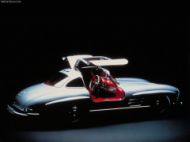
Francisco escribió:El forero Cabfl comenta que las carrocerías de aluminio irómnicamente son malas pero mercedes las ha copiado. Perdona pero mercedes en que modelos ha usado el aluminio??? en modelos deportivos para aligerar peso y ganar prestaciones y han sido muy pocos como el SLS por ej. Pero el clase S es un monocasco de acero y como comprenderás que esa teoría de usar aluminio para hacerlo más ligero y más grande cae por su propio peso porque el S no es un coche pequeño.
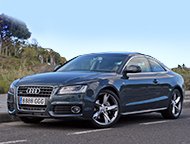
Si MB usa chasis de aluminio en sus gamas deportivas, es por sus evidentes ventajas de menor peso. Audi, como marca premium, y además inovadora en esta tecnología, usa las ventajas del Aluminio en todos sus coches. El resultado es q Audi fabrica coches más ligeros q MB:
A5 3.2v6: 1495Kg
A5 3.2v6 quattro: 1535Kg
ClaseE coupe 350CGI v6: 1670Kg
A5 2.0TFSI: 1420Kg
A5 2.0TFSI quattro: 1490Kg
ClaseE coupe 250CGI: 1575Kg
no me parece muy "premium" por parte de MB, fabricar coches tan pesados.
Francisco escribió:... Audi presume de la tracción quattro, que es un maravilloso sistema pero que no envidia nada a un 4 matic o un X de BMW. El motor de audi va a más hacia delante en su diseño por la tracción quattro, pero también es el culpable de que los modelos con tracción delantera acusen exageradamente el irse de morro por un mal reparto de pesos. De hecho, en un deportivo pura sangre, BMW con la serie M e incluso Mercedes en sus modelos AMG pulen a los S y RS de audi dinámicamente...
Eso era en los modelos antiguos. Los modelos actuales tienen el eje delantero adelantado y el motor retrasado. Y de comportamiento dinámico, mejor informate, sobre todo cuando mencionas los S y RS. De las 3 marcas, la q ofrece mayor estabilidad y aplomo es Audi.
Francisco escribió:Te vuelvo a decir que las diferencias en consumos, emisiones etc son mínimas. Tu en un motor 200CGI de mercedes tienes cadena de distribución, en un 2.0TFSI tienes correa, por lo que cada 120,000 km o 6 años como marca la casa tienes que pasar por caja y en algunos modelos hay que hacer un obrón para sustituirla...
Los TFSI usan cadena desde hace ya unos años. INFORMATE.
Las diferencias en prestaciones y emisiones son mayores de lo q imaginas.
Y de fiabilidad, poco q envidiar.



 )
)